Saturday in Central Florida has its own rhythm. The lakes glitter, the sidewalks fill, and you can feel the weekend plans stacking up like plates on a busy expo line. That’s the energy most first-time owners want to bottle, a place people choose on purpose, not just because it’s nearby.
If you’re learning how to start a restaurant, you’ll move faster with a simple roadmap: nail the concept, build a menu that sells itself, run the numbers like a skeptic, then handle permits and location details early. The biggest rookie mistakes are predictable, underestimating costs, picking a location that can’t support the idea, and opening with a concept that’s fuzzy.
Mount Dora is a great reminder that small markets run on trust and repeat visits. Spots like Eden Abbey Brewing (405 S Highland St, Mt Dora, FL) get that right by mixing a welcoming, community-first atmosphere with food and beer that brings people back again and again.
Start with a clear concept that people will drive for
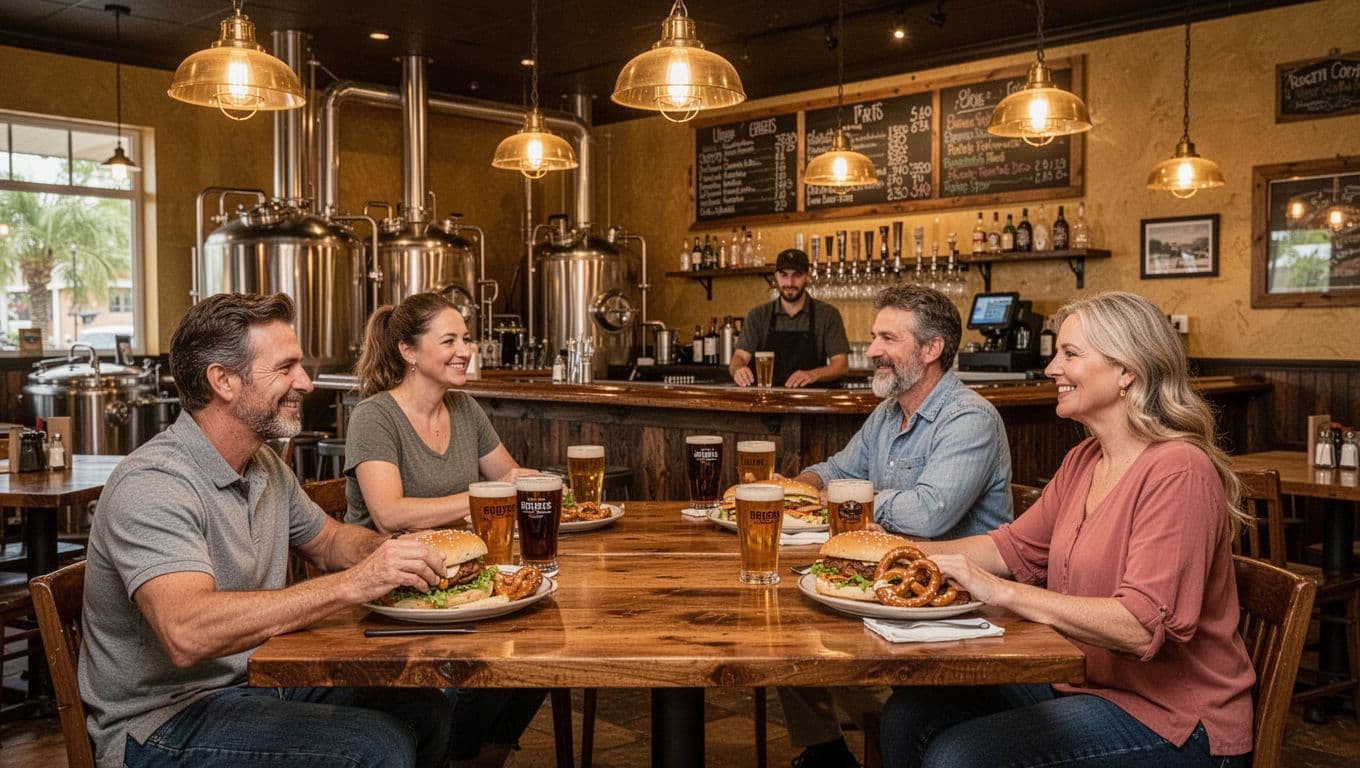
Friends sharing craft beer and comfort food in a warm brewery-style dining room, created with AI.
A restaurant concept isn’t a vibe board. It’s a clear promise. You’re deciding who you serve, what you serve, and why your place beats staying home. When the concept is sharp, your menu, design, staffing, and marketing stop fighting each other.
In Central Florida, “people will drive for it” usually means one of two things. Either you’re the easy favorite (fast, consistent, priced right), or you’re the special outing (memorable food, great drinks, worth the parking). Eden Abbey leans into the outing side, pairing shareable food with beer on tap, so a night out feels complete in one stop.
Here’s a quick concept checklist you can finish in one sitting:
- Theme: What’s the story of the food and drinks?
- Price range: Where does the average check land?
- Service style: Counter service, fast-casual, full-service, brewery taproom?
- Hours: Lunch, late-night, weekends, or focused limited days?
- Menu size: Tight and repeatable, or broad and flexible?
Once you can say those five things in plain words, you’re ready to plan the menu and costs. If you want a solid reality check on typical opening expenses, skim a current breakdown like this 2026 restaurant startup cost guide and compare it to your concept.
Pick your “must-order” items before you pick your logo
Branding is fun. Signature items pay the bills.
Start by choosing 6 to 10 “must-order” items that guests talk about later. Those dishes should guide your kitchen layout, prep plan, training, and marketing photos. If a dish is hard to execute on a slammed Friday, it isn’t signature yet.
Look at a community-loved spot like Eden Abbey and you’ll notice a pattern: familiar food with a twist, and plenty of shareable options. Think crispy chicken sandwiches with bold toppings, hand pies (empanada-style) with different fillings and dipping sauces, a blackened fish sandwich, a shaved steak hoagie, plus wraps and salads for lighter appetites. Add snackable starters like pretzel bites with a beer-cheese-style dip, and you’ve got the kind of menu that works for groups.
Dessert matters here too. A warm apple crumble with ice cream, or banana-forward treats with a rich caramel-like sauce, can turn “we’re good” into “fine, let’s stay for one more thing.” That last course often becomes the memory.
The goal is a tight menu that does three things:
Keep prep simple, so your team can repeat it perfectly.
Travel well, so takeout doesn’t wreck your reputation.
Photograph well, so your marketing looks like your real food.
If you’re opening in a smaller city like Mount Dora, that “must-order” list also becomes your word-of-mouth engine. People don’t recommend a full menu, they recommend one dish.
Price it so you can sleep at night
Pricing is where good cooks lose money. You can’t “busy” your way out of thin margins.
Start with plate cost. If a dish costs you $4.00 in ingredients, you need a price that covers labor, rent, waste, and the occasional comp. Many restaurants aim for food costs around 28 to 32 percent, then keep labor in a similar range. In 2026, labor pressure across Florida is real, so conservative assumptions help you survive slow weeks.
A simple guardrail: if your costs look tight on paper, they’ll look worse in real life. Build in waste, training meals, and mistakes. Also, don’t launch with 25 ingredients that only appear once. Early menus should share components.
That said, you can still offer variety without chaos. Keep a small set of house sauces or dressings that change the mood of a dish, like chimichurri, buffalo, ranch-style, sweet chili, and a beer-cheese-style sauce. With those, one chicken or steak prep can turn into multiple menu items.
A new restaurant doesn’t fail because it lacks ideas, it fails because it can’t repeat the best ones at a profit.
Write the business plan that gets you funded and keeps you on track

Photo by Ketut Subiyanto
A business plan doesn’t need fancy language. It needs decisions and numbers. Think of it as your “minimum viable plan,” the smallest document that still forces clarity.
Lenders and partners want proof you understand three things: demand, margins, and execution. You’re not just selling food, you’re selling consistency on a schedule, with payroll due every week.
If you want a Florida-specific overview to compare against your notes, this Florida restaurant opening roadmap can help you spot gaps before they turn into expensive surprises.
Know your startup budget and your break-even point
For a 20 to 50 seat restaurant in Florida (roughly 1,200 to 3,000 square feet), startup costs in 2026 commonly land between $250,000 and $1 million or more. Fast-casual can sit on the lower end, while full build-outs and alcohol licensing can push you up fast.
Your big cost buckets usually look like this:
- Permits and licensing (wide range, because alcohol can change everything)
- Build-out and renovations (often priced per square foot)
- Kitchen equipment (new, used, or financed)
- Opening inventory (food and beverage)
- Marketing (pre-opening and launch)
- Systems and pro fees (POS, legal, accounting, insurance, deposits)
Besides the startup spend, plan for at least six months of cash runway. That runway is what keeps you calm when the AC breaks, a cook quits, or a slow season hits harder than expected.
Next, calculate break-even. You’re answering one question: how much do I need to sell each month to cover fixed costs?
A simple way to think about it:
Fixed costs are rent, utilities, insurance, loan payments, and some admin expenses. Variable costs are mostly food and labor. If fixed costs are $15,000 a month, and your food plus labor averages 60 percent of sales, you need enough sales so the remaining 40 percent covers that $15,000. In that example, break-even sits around $37,500 monthly, or about $1,250 a day.
Once you know that number, your concept gets sharper. You’ll see right away whether you need higher check averages, more volume, or fewer fixed expenses.
Choose funding that matches your risk level
Funding should fit your temperament, not your ego.
Savings gives you control but increases personal risk. Partners can add cash and skills, but only if roles and exit terms are written clearly. Many first-time owners also look at SBA-style financing, because it’s designed to support small businesses through banks. Start with the official overview of SBA loan programs so you understand options before you sign anything.
You may also use equipment financing, which can preserve cash, or negotiate tenant improvement dollars from a landlord, especially if the space needs major work. Still, never assume a handshake promise will show up in the final lease.
Friends and family money can work, but vague terms can ruin relationships. Put it in writing, including payback timing and what happens if sales lag.
Investors and lenders usually ask the same core questions:
- What’s the concept, and why will people choose it weekly?
- What are your margins, and how will you protect them?
- Why this location (traffic, parking, nearby anchors)?
- Who’s running the floor and kitchen day to day?
- How will you earn repeat customers, not just grand-opening crowds?
A brewery and restaurant model like Eden Abbey’s is a useful case study here. When food, beer, events, and community live in the same room, repeat visits come easier. That repeat behavior is what lenders love.
Handle Florida permits, licensing, and location details early
Permits feel like paperwork, until they become your critical path. The fastest openings treat licensing and inspections as part of the build-out plan, not a final chore.
In Florida, timelines often run in weeks and months, not days. Plan reviews, contractor schedules, and inspection calendars don’t care about your opening date announcement.
Location details matter even more in a place like Mount Dora, where charm and historic character can bring extra constraints. A community-minded, family-owned spot can become a “must-stop,” but only if the space can legally operate the way you intend.
Lock in the right location, zoning, and build-out plan
A great lease in the wrong zoning district is a trap.
Before you fall in love with a space, confirm it can be used as a restaurant, brewery, or bar, depending on your plan. Start with your city’s resources and ask direct questions about your address and use case. In Mount Dora, the official Planning and Zoning information is the right starting point, because zoning can block you before you even apply for a food license.
Also, walk the area like a guest, not an owner. Is parking realistic on a busy night? Will outdoor seating trigger noise concerns? Are you inside a district with design limits that affect signage, vents, or patios? Those details can add time and cost.
Build-out planning should include inspection milestones, not just finish dates. Expect delays, because subcontractors get booked, parts arrive late, and small changes stack up. If your opening depends on one final inspection, you’re already late.
A simple expectation to set: permitting and inspections usually take weeks, sometimes longer. Plan your staff hiring and marketing calendar around that reality.
Get your licenses in the right order (and avoid rework)
You’ll save time by applying in the right sequence, because later steps often require earlier proof.
In plain terms, the flow usually looks like this:
- Register your business (LLC or other structure) and get an EIN.
- Get your local Business Tax Receipt (your city or county).
- Apply for the Florida food service license and complete any plan review.
- Register for Florida sales tax so you can collect and remit properly.
- Schedule fire safety sign-off and any final inspections.
- Add alcohol permits (beer and wine, liquor, or brewery permits) if needed.
For Mount Dora businesses, you can review the city’s requirements for a Business Tax Receipt (BTR) early, so you don’t discover a missing document at the worst moment.
On costs, many basic filings are fairly modest (often roughly $50 to $125 for certain state filings, plus local receipt costs that may land around $50 to $100 in smaller cities). Food licensing varies by size and seating. To see the official state fee structure, use the DBPR page on Florida food service license fees. It’s clearer than guessing from forum posts.
Alcohol is its own timeline. Beer and wine permits can be simpler than full liquor, but they still take planning. If you brew, federal approval can also be required before state steps.
One more 2026 reality: if you add operational fees to checks, disclose them clearly on menus and receipts. Guests don’t mind transparency, they hate surprises.
Conclusion
Starting a restaurant comes down to a few steady choices: a clear concept with signature items, pricing that protects your sleep, numbers that reveal break-even, and funding that fits your risk tolerance. Then, handle location, zoning, and Florida licensing early, because delays don’t care how good your food is. When you do it right, your restaurant becomes part of people’s weekends, not just a place they try once.
If you want to see a community-first food and beer model in action, spend an evening at Eden Abbey Brewing at 405 S Highland St, Mt Dora, FL. It’s a welcoming, family-owned spot that locals cherish, with shareable food, thoughtful desserts, and beers on tap (plus a zero-proof hop option). Stop in Tuesday through Sunday, and reach out or swing by to get a feel for the kind of place people return to often. Community is the best marketing you’ll ever earn.

