On a warm Central Florida weekend, a good taproom has its own rhythm. The air smells like sweet mash and toasted grain. Glasses clink at community tables. Someone’s deciding between “light and crisp” or “dark and roasty.” In Mount Dora, that scene feels right at home, especially on a day-trip loop of shops, lakeside walking, and a long lunch that turns into an easy afternoon.
If you’re learning how to start a brewery, you don’t need a 60-page business plan to begin. You need a clear path: choose your business model, line up licenses, build the space, then earn regulars with beer, food, and consistency.
For a real local example of what works, visit Eden Abbey Brewing and Restaurant (405 S Highland St, Mt Dora, FL). It’s family-owned, community-loved, and built to welcome everyone, from hop fans to designated drivers.
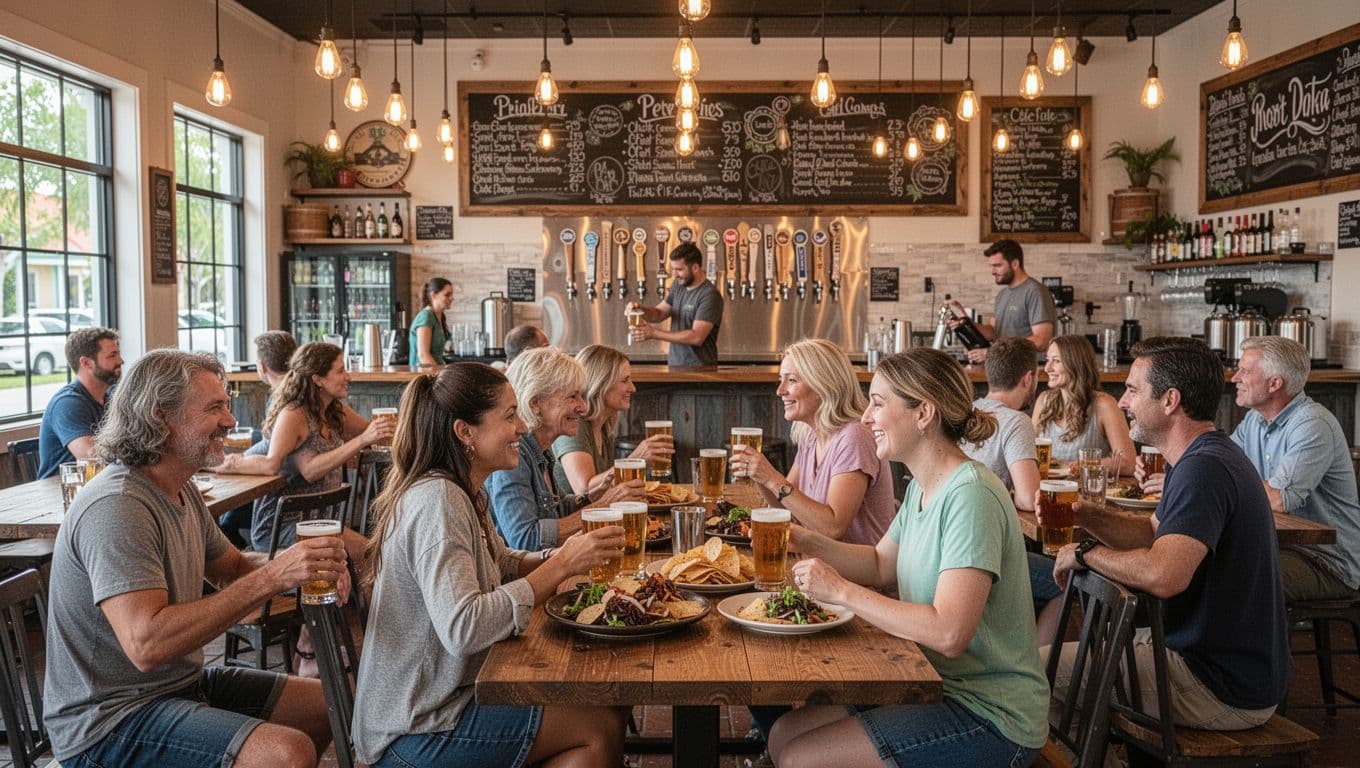
Community tables and a busy bar, the kind of taproom energy many new breweries aim for, created with AI.
Start with a plan you can actually run day to day
The biggest early mistake is planning a brewery you can’t operate on a tired Tuesday. A smart plan keeps your workload realistic and your costs grounded. Before you price a can or name a beer, decide what kind of brewery you’re building, then write three simple outputs: a one-page concept, a starter budget, and a timeline that assumes licensing takes months, because it often does.
If you want a helpful structure for those early choices, a practical read is a step-by-step brewery planning blueprint. Use it as a guide, then tailor the numbers to your rent, your labor market, and your build-out needs in Central Florida.
Pick your “lane”: taproom brewery, brewpub, or production shop
Most first-time owners do best when they pick one lane, then do it well. Each model can work, but each one changes your cash flow, staffing, and space needs.
Here’s a quick comparison to make the trade-offs obvious:
| Model | Main revenue | Space needs | Staffing reality |
|---|---|---|---|
| Taproom brewery | Pints, flights, packaged-to-go | Brewing area plus a welcoming bar space | Bartenders, a brewer, light kitchen or food partners |
| Brewpub | Beer plus a full food program | Bigger kitchen, seating, storage | Kitchen team plus FOH, more scheduling complexity |
| Production-only | Wholesale kegs and packaged beer | More tanks, loading access, cold storage | Cellaring and packaging labor, sales routes |
A taproom-first brewery is popular because direct sales often leave more margin than wholesale. In plain terms, selling a pint across your own bar usually beats selling a keg at distributor pricing. You also get instant feedback. If a lager is flying and the double IPA is stalling, you can adjust fast.
Production-only can scale, but it tends to burn cash early. You’ll need more tanks, more cold space, and a sales engine before you’re “known.” For many new owners, that’s a steep hill.
Build a brand people can feel, not just a logo
Your brand is what guests remember when they’re back in their car. It’s the lighting, the playlist, the way staff explains a beer, and whether the menu solves group drama.
Eden Abbey is a good local example of “felt” branding. The vibe is inviting, with a community-first tone that fits Mount Dora’s weekend energy. The food menu also does a lot of quiet work: burgers on brioche, saucy wings, pretzel bites with beer cheese, and empanadas that make it easy to share. That kind of variety keeps a group happy even when tastes don’t match.
Your beer list should tell the same story. Eden Abbey’s variety shows how to serve different palates without confusing people: a light lager option, a hazy IPA, a blonde ale, a stout, a dark lager, and a playful seasonal-style sour. They also offer a hop-infused seltzer water at 0 percent ABV, which is a simple way to include designated drivers and non-drinkers without making them feel like an afterthought.
Licenses, permits, and Florida rules you need to get right
Licensing is where enthusiasm meets paperwork. The goal is simple: line up federal, state, and local approvals in the right order, with clean documents. When people scramble here, timelines stretch and rent still comes due.
Start by reading the official TTB Brewer’s Notice overview. It helps you understand what the federal government expects before you brew a single batch for sale.
Think of licensing in three layers:
- Federal approval to operate as a brewer.
- Florida alcohol licensing for how you make and sell beer.
- Local approvals for the building, zoning, and food service.
A good rule: don’t sign a lease you can’t survive if approvals take longer than planned. Build a buffer, because delays happen.
Federal approval: the Brewer’s Notice comes first
The Alcohol and Tobacco Tax and Trade Bureau (TTB) reviews your Brewer’s Notice application, your ownership details, and your brewery setup. That means your floor plan and equipment list matter earlier than most people expect. If your layout changes mid-process, you can trigger revisions and slowdowns.
Before you apply, gather your documents and be ready to show how the premises will work. The TTB’s checklist of what to gather before you apply is a strong starting point. It can keep you from missing basics like diagrams, control documents, and business entity records.
Expect background checks and verification steps. Many small breweries report that approvals can take 30 to 90 days, although timing varies with workload and application quality. Start early, then use that waiting period to finish recipes, vendor quotes, and build-out plans.
Florida licensing and common add-ons for serving on-site
In Florida, most breweries choose between two main paths:
- CMB license (Manufacturer/Brewer of Malt Beverages): often used for breweries that plan to distribute. Current fee is about $3,000 per year.
- CMBP license (Brewpub-style): designed for brewing mainly for on-site sales, with a lower fee around $500 per year.
You’ll typically apply using DBPR ABT-6001. For a direct reference point on the CMB track, the state’s Manufacturer/Brewer of Malt Beverages (CMB) checklist is worth reviewing.
Florida also requires a state beer tax bond. The minimum is commonly $20,000. In everyday terms, that bond is a financial backstop to make sure excise taxes get paid.
If you serve alcohol on-site, you may need add-ons beyond your manufacturing license. Beer and wine service often ties to a 2COP license; spirits typically require 4COP. Costs vary by county, and a rough range many owners see is $168 to $1,820 depending on the license and location.
Finally, don’t skip local approvals. Zoning, a Certificate of Occupancy, a local business tax receipt, and health permits (if you serve food) can each hold up opening day.
Build the brewery: equipment, recipes, and a menu that keeps people hanging out
This is the fun part, because it’s real and physical. Tanks show up. Hoses get hung. The first brew day feels like moving into a new house, only the kitchen is stainless steel and everything needs a drain.
In Mount Dora, breweries also compete with sunshine. Florida heat changes what people order. Crisp lagers and bright, lower-bitterness beers often shine in the afternoon. Then, as the evening cools, darker styles and dessert pairings start to sell.
Eden Abbey’s current tap mix is a useful model for balance: a light lager, a hazy IPA, a blonde ale, a milk stout, a dark lager (schwarzbier-style), a seasonal-style sour, plus a 0 percent hop-infused seltzer option. That spread gives almost every guest an easy “yes.”
Equipment and space basics (what you need on day one)
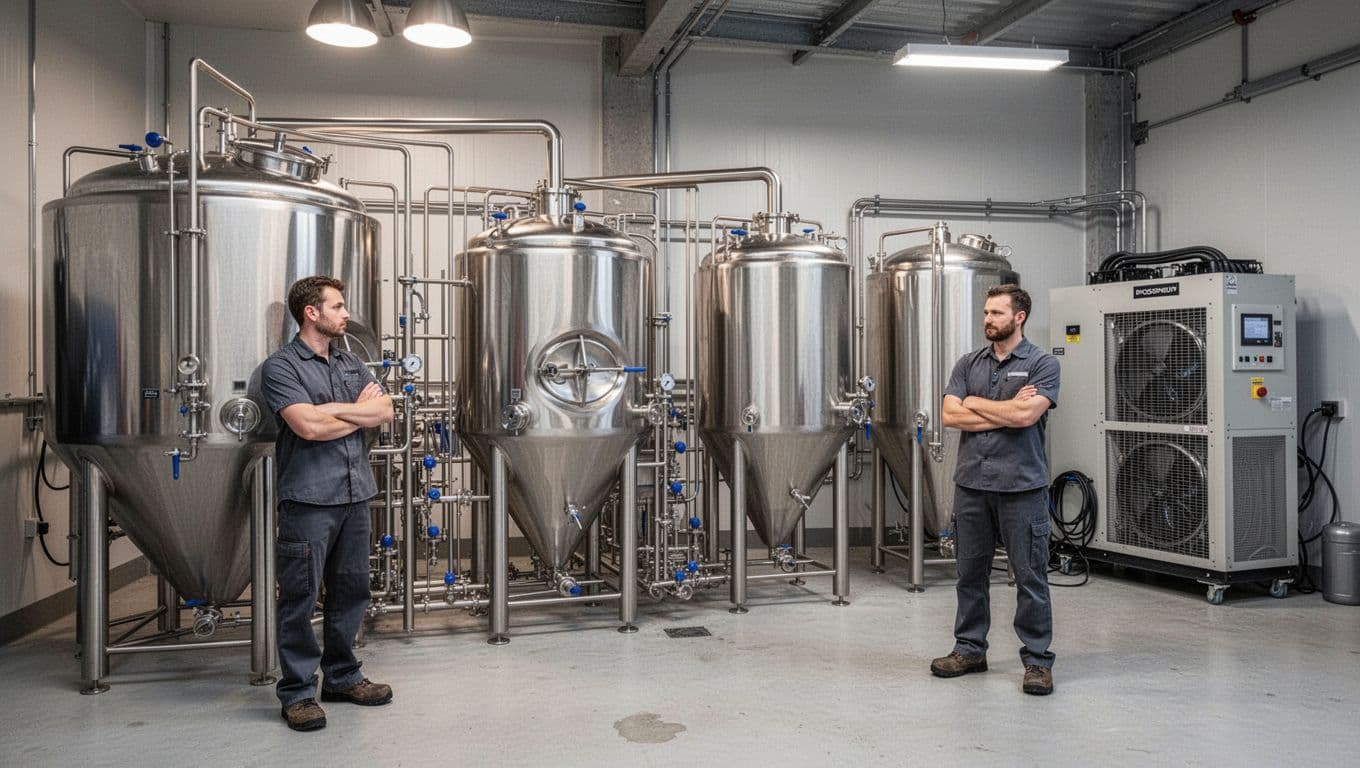
Core brewery equipment in a clean production space, the backbone of consistent beer, created with AI.
A first brewery build usually includes a brewhouse (kettle and mash tun), fermenters, and at least one brite tank. You’ll also need glycol chilling, a solid cold room plan, and a way to keg or package beer. Cleaning equipment matters as much as shiny tanks, because dirty gear can ruin a batch fast.
Plan for:
- Water and drainage: good water treatment and floor drains save headaches later.
- Cleaning and sanitation: pumps, spray balls, and chemical storage, plus safe procedures.
- Basic quality checks: even simple gravity, pH, and temperature discipline improves consistency.
- Cold storage: kegs, cans, and food all fight for cold space, so design carefully.
New gear costs more, but it can reduce downtime. Used gear can be a deal, but only if you inspect it and budget for repairs. Either way, equipment and build-out often become the largest checks you’ll write, so don’t guess. Get quotes early and pad them.

Photo by ELEVATE
Design a first tap list people understand and order again
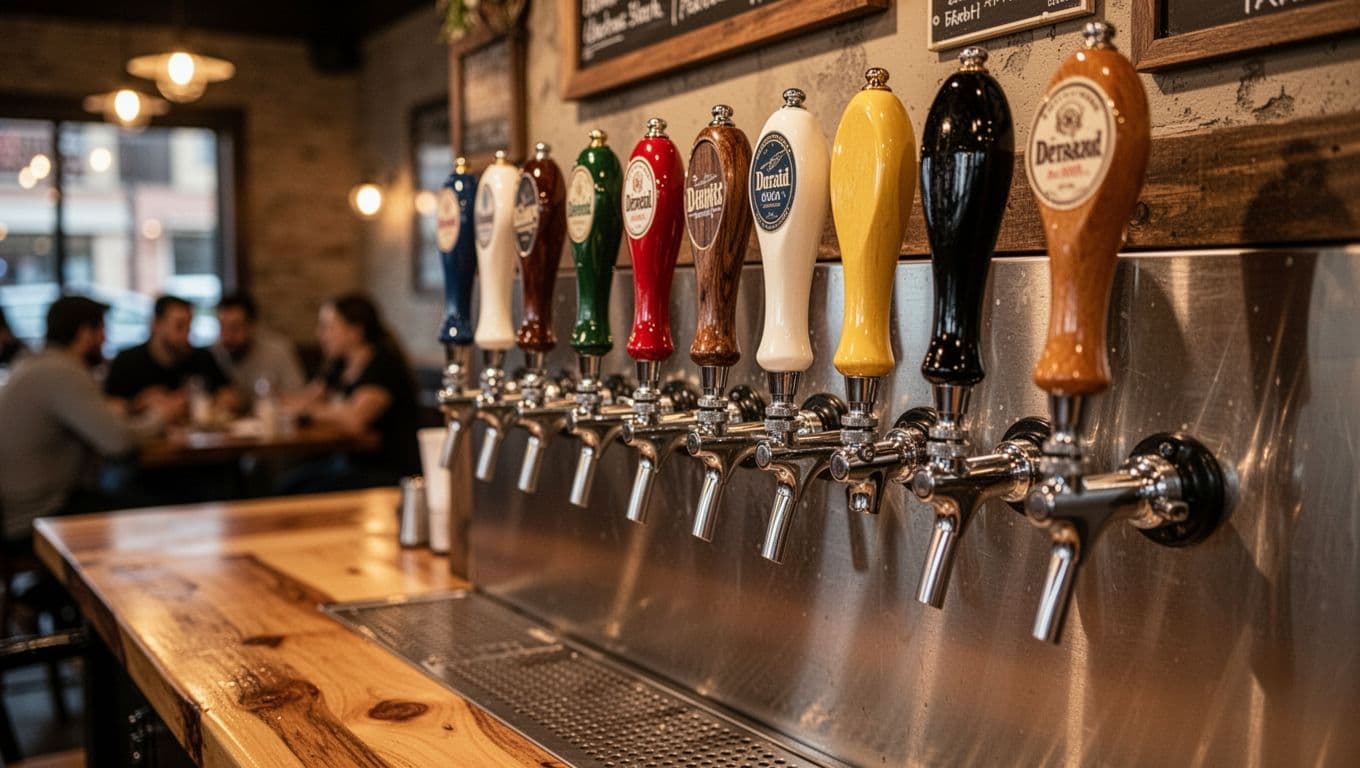
A draft wall that invites guests to try a flight, then come back for a full pour, created with AI.
Start with 4 to 6 approachable beers and add one seasonal or “fun” pour. Your first list should read like a good playlist, familiar enough to relax people, with one surprise track.
A Central Florida-friendly starter lineup might look like this:
- A light lager for easy, patio drinking.
- A hazy IPA for hop fans who want soft bitterness and big aroma.
- A blonde ale for the “one more” crowd.
- A stout that can double as dessert.
- A dark lager for roasty flavor without heavy weight.
- A seasonal sour for something playful.
Eden Abbey does this well with beers like a crisp light lager, a hazy IPA, a blonde ale, a milk stout, and a smooth dark lager, plus a peppermint mocha sour when you want something different. They also show a smart habit: list ABV and IBU. Guests trust menus that explain what they’re getting.
In addition, include a 0 percent option. Hop-infused seltzer works because it still feels “brewery-adjacent.” Add-ins like cranberry or blueberry can turn it into a mocktail that people actually want to order.
Food that fits the beer (and keeps groups at the table)
Food isn’t just extra revenue in Florida. It stretches visits. It helps families and groups settle in. It also turns a brewery into a weekend habit.
Eden Abbey’s menu shows how to build that habit with beer-friendly options: pretzel bites with beer cheese, wings with multiple sauces, fried snacks like jalapeño poppers, and a burger lineup that ranges from classic to spicy. Empanadas also make sharing simple, which keeps tables social instead of silent.
Three easy pairing ideas you can copy:
- A hazy IPA with spicy or smoky food (think jalapeños, chipotle cheese, or buffalo sauce).
- A milk stout with chocolate or banana desserts (a mocha note loves sweet richness).
- A light lager with fried snacks (pretzels, chips, pork rinds) for clean refreshment.
Make money and build a loyal following from week one
A brewery can make great beer and still struggle if it doesn’t build repeat behavior. In Central Florida, weekends are busy, but weekdays pay the bills. That’s why pricing, sales channels, and community events matter as much as recipes.
Also, keep the reality simple: most new breweries do best when they sell over their own bar first, then widen the footprint after service is steady.
For Florida-specific legal and business considerations, it’s helpful to skim a law firm’s perspective like a Florida brewery step-by-step guide, then confirm details with your own attorney and accountant.
Sales channels: taproom first, then distribution when you are ready
Beer sales in the US often run through a three-tier system: producer, distributor, retailer. Many retail placements require a distributor in the middle. Your taproom is the exception because you can sell direct to guests on-site (and often to-go, depending on your licensing).
That’s why taproom focus is so common early on. You control the experience, the margins, and the feedback loop. Later, once your beer stays consistent and your brand has demand, you can plan a distribution push. Even then, start small. A few strong accounts beat a dozen lukewarm ones.
Be careful with license choices, too. Some brewpub paths may limit how much you can distribute. If you expect a wholesale future, plan that now instead of re-working later.
Events, memberships, and community habits that keep seats full
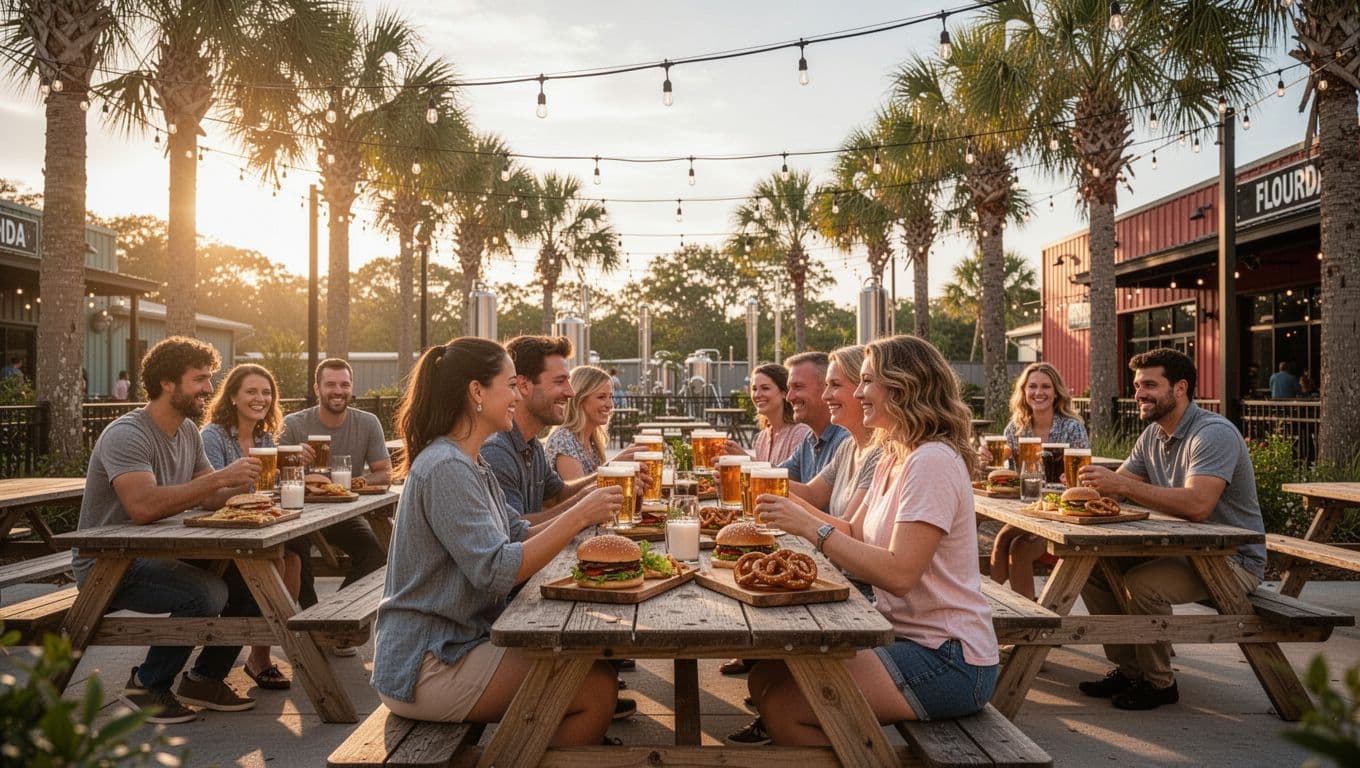
Patio-friendly brewery culture, where flights, food, and string lights turn into a weekly ritual, created with AI.
A brewery thrives when people say, “That’s our place.” You earn that by giving them reasons to return that aren’t only beer releases.
Trivia nights, live music, charity tie-ins, and small release parties build rhythm. Family-friendly hours help too, because many Central Florida groups mix couples, friends, and kids.
Membership programs can also create steady traffic. Eden Abbey’s Tasters’ Guild approach is a good example of what locals respond to: perks, special events, and a sense that your pint supports something bigger. Consistency matters as well. Eden Abbey is open Tuesday through Sunday, which trains regulars to treat it like a dependable hangout, not a rare occasion.
As of February 2026, Mount Dora hasn’t seen widely reported brand-new brewery openings, so the places that win are the ones that keep earning loyalty week after week.
Conclusion
Starting a brewery is part construction project, part hospitality job, and part long-term community bet. Keep the order simple: pick a model you can run daily, start licensing early (TTB first, then Florida ABT and local permits), build a clean production setup, then launch with a clear beer list and food that fits your crowd. After that, your real job begins, showing up with consistency until regulars treat your taproom like a second living room.
Before you spend big, talk with a brewery-friendly lawyer and accountant, and begin the federal and Florida paperwork early so your timeline doesn’t collapse.
When you want to study a taproom that gets the details right, drive to Eden Abbey Brewing and Restaurant at 405 S Highland St, Mt Dora, FL. Try a flight that runs from light lager to hazy IPA to milk stout, grab a burger or a few empanadas, and ask the team what makes a taproom thrive. That kind of firsthand homework is worth more than a dozen spreadsheets, and it’s a great weekend.

